Key Takeaways
- Childproof every room by identifying hazards from a child’s height and perspective.
- Secure furniture, televisions, windows, cabinets, and other items that children may climb, pull, or open.
- Keep dangerous items such as medicines, cleaning products, sharp tools, and small objects out of children’s reach.
- Pay special attention to kitchens and bathrooms, where heat, water, chemicals, slippery surfaces, and electrical devices can create serious risks.
- Use safety gates, locks, outlet covers, smoke alarms, and other appropriate protective measures throughout the home.
- Keep stairs, hallways, bedrooms, and outdoor areas clear of trip hazards and unsafe objects.
- Regularly reassess your home as children grow and develop new abilities, while teaching age-appropriate safety habits.
A home should be a place where children can learn, play, explore, and grow without being exposed to unnecessary risks. However, everyday household items, furniture, appliances, stairs, windows, and outdoor areas can create hazards that adults may overlook. Child safety at home is not simply about putting away sharp objects or installing a few safety gates. It requires looking at the entire house from a child’s perspective and identifying potential dangers at every stage of development.
By taking a room-by-room approach, parents and caregivers can systematically reduce risks, create safer routines, and make practical improvements that provide greater peace of mind.
Why Is Childproofing the Entire Home Important?
Childproofing is most effective when it is treated as an ongoing process rather than a one-time project. Young children are naturally curious and often interact with their surroundings in ways adults do not anticipate. A drawer that seems harmless to an adult can become a source of dangerous objects, while a chair positioned near a window can provide a child with an easy way to climb.
As children become more mobile, their ability to reach, climb, open, pull, and explore also changes. This means a home that was safe for a crawling baby may present new hazards to an active toddler. A thorough safety review helps families anticipate these changes instead of reacting to accidents after they happen.
Start by walking through your home at your child’s height. Look for objects within reach, unstable furniture, exposed electrical outlets, accessible cords, sharp corners, small objects, unlocked cabinets, and areas where a child could become trapped or fall.
It is also important to consider hazards that may not be immediately visible. Safety problems can include:
- Unsecured furniture: Bookshelves, televisions, dressers, and cabinets can tip if a child climbs or pulls on them.
- Accessible chemicals: Cleaning products, detergents, medicines, and personal care products can be dangerous if swallowed or handled improperly.
- Open access to restricted areas: Stairs, garages, utility spaces, and certain storage areas may contain hazards that require adult supervision.
- Water-related dangers: Bathtubs, buckets, toilets, pools, and other water sources can pose serious risks to young children.
- Heat sources: Stoves, ovens, heaters, fireplaces, irons, and hot drinks can cause burns.
- Choking hazards: Small toys, coins, batteries, food items, and household objects can be dangerous for babies and toddlers.
The goal is not to make the home completely inaccessible or eliminate every possible risk. Instead, effective childproofing creates reasonable barriers between children and hazards while allowing them to safely develop independence.
How Can You Make the Living Room Safer?
The living room is often one of the most frequently used spaces in a home, which makes it easy to overlook its potential hazards. Children may spend hours playing, crawling, watching television, reading, or interacting with family members in this area. At the same time, living rooms commonly contain televisions, coffee tables, lamps, power cords, shelves, decorative objects, and furniture that children can climb.
Because this room often serves multiple purposes, safety measures should balance protection with accessibility. Parents should regularly inspect the space as children grow, especially when a child begins pulling themselves up, walking, climbing, or experimenting with furniture.
Begin by securing large furniture to the wall. Dressers, bookcases, shelving units, and entertainment centres should not be left freestanding if they could tip when climbed on or pulled.
Pay particular attention to the television. A television placed on an unstable stand can become a serious hazard if a child grabs the screen or climbs onto nearby furniture. Where appropriate, use a suitable mounting system or secure the television and stand according to the manufacturer’s safety recommendations.
Other living room improvements include:
- Cover electrical outlets: Use appropriate outlet covers where outlets are accessible to young children.
- Manage electrical cords: Keep cords organised and away from areas where children can pull, chew, or trip over them.
- Secure lamps: Place floor lamps and other easily tipped items where children cannot knock them over.
- Remove small decorations: Coins, batteries, figurines, and other small objects should be kept out of reach.
- Protect sharp corners: Consider corner guards on tables or other furniture with hard, pointed edges.
- Keep windows secure: Windows should have appropriate child-safety measures, particularly on upper floors.
- Create a designated play area: Keeping toys in a defined space can reduce clutter and make it easier to identify hazards.
Do not assume that placing an object on a table makes it safe. Toddlers can climb onto sofas, chairs, boxes, and other furniture to reach things that were previously beyond their reach.
What Should You Check in the Kitchen?
The kitchen is one of the most hazardous rooms for young children because it combines heat, sharp objects, electricity, chemicals, glass, and potentially dangerous appliances in a relatively compact area. Even when an adult is nearby, a child can reach a hot pan, pull down a container, open a cabinet, or touch an appliance within seconds.
Kitchen safety therefore depends on both physical safeguards and consistent habits. Families should establish clear boundaries about which parts of the kitchen children may access and which areas should remain restricted. The safest approach is to prevent children from reaching hazards rather than relying entirely on verbal warnings.
Start by making cooking appliances less accessible. Whenever possible, use the rear burners of a cooktop and turn pot handles away from the front edge. An adult should never leave hot cookware unattended when a young child is nearby.
Sharp objects such as knives, scissors, peelers, and skewers should be stored in secured drawers or cabinets that children cannot open.
Other kitchen safety measures include:
- Secure cabinets: Use child-resistant latches on cabinets containing cleaning products, sharp tools, glassware, or other hazardous items.
- Lock away chemicals: Dishwashing detergents, oven cleaners, disinfectants, and other household chemicals should remain inaccessible to children.
- Keep appliances away from edges: Small appliances and their cords should not be positioned where children can pull them down.
- Store breakables safely: Glass containers and fragile dishes should be kept out of reach.
- Check the rubbish bin: Use a secure bin or place it somewhere children cannot access it.
- Keep hot liquids away: Cups of coffee, tea, soup, and other hot liquids can cause serious burns.
- Secure the refrigerator: If necessary, use an appropriate child lock to prevent access to potentially unsafe foods or liquids.
A useful habit is to keep a clear zone around the stove and oven whenever cooking. As children become more mobile, even a few seconds of distraction can give them access to something dangerous.
How Do You Make the Bathroom Safer for Children?

Bathrooms contain several different categories of hazards, including water, slippery surfaces, medicines, cosmetics, electrical appliances, and hot water. Children may also be tempted to play with taps, open cabinets, or reach for bottles that look interesting. Because bathrooms are often relatively small, hazards can be surprisingly concentrated. Water safety deserves particular attention because young children can drown in relatively small amounts of water and should never be left unattended around water.
Safety improvements should therefore address access, temperature, storage, surfaces, and electrical equipment. Parents should also teach children basic bathroom safety as soon as they are old enough to understand simple rules.
Never rely solely on bath seats, flotation devices, or similar products to supervise a child around water. An attentive adult should remain within immediate reach of a young child during bathing.
Keep medicines, vitamins, cosmetics, razors, cleaning products, and other potentially harmful items in secured storage. Do not assume that a high shelf is always sufficient, especially as children become taller and more capable of climbing.
Important bathroom precautions include:
- Control water temperature: Set household hot-water systems appropriately and check bath water before a child enters.
- Reduce slipping risks: Use suitable non-slip surfaces and keep floors as dry as reasonably possible.
- Secure the toilet: Consider an appropriate toilet lock if young children could access the bathroom without supervision.
- Protect electrical appliances: Keep hair dryers, straighteners, shavers, and other electrical devices away from water and unplug them when not in use.
- Secure cabinets: Use child-resistant locks for cabinets containing chemicals, medicines, or personal care products.
- Keep small objects away: Items such as bottle caps, razors, cosmetics, and accessories can present choking or injury hazards.
- Install appropriate grab supports: Where needed, properly installed grab bars can improve stability for children and adults alike.
If you are updating an older bathroom, safety should be part of the planning process rather than an afterthought. A successful bathroom renovation can improve more than appearance when it incorporates safer surfaces, better storage, appropriate lighting, and practical layouts.
How Can You Keep Bedrooms and Nurseries Safe?
Bedrooms and nurseries should provide a secure environment for sleeping and quiet activities, but they can contain hidden risks. Babies and young children spend substantial amounts of time in these spaces, often without direct adult interaction while sleeping. Furniture placement, bedding, cords, toys, windows, and small objects all deserve attention. As children grow, their ability to climb and manipulate objects changes, meaning safety checks should be repeated periodically.
A nursery designed for a newborn may need significant adjustments once the child becomes mobile. The safest sleeping environment is one that follows age-appropriate sleep guidance and keeps unnecessary objects away from the sleeping area.
For babies, keep the sleep space clear and use an appropriate sleep surface. Avoid placing loose objects, cords, or unnecessary soft items where they could create hazards.
Furniture should also be positioned thoughtfully. Keep beds and other climbable furniture away from windows where possible, and secure tall furniture to prevent tipping.
Consider these additional precautions:
- Secure window coverings: Keep blind and curtain cords inaccessible to young children.
- Anchor furniture: Secure dressers, wardrobes, bookcases, and other tall furniture.
- Inspect toys: Remove broken toys and check for loose or detachable parts.
- Keep small items out of reach: Coins, batteries, jewellery, and other tiny objects can pose choking risks.
- Use age-appropriate furniture: Replace items when a child outgrows them or when their mobility creates new risks.
- Maintain clear floors: Avoid leaving toys, bags, and other objects where a child could trip.
- Check night lighting: Use appropriately positioned lighting that provides visibility without creating an accessible heat or electrical hazard.
As children get older, involve them in keeping their room safe. Teaching them to put toys away, avoid climbing furniture, and keep electrical devices away from water can turn safety into a daily habit.
What Makes Stairs and Hallways Dangerous?
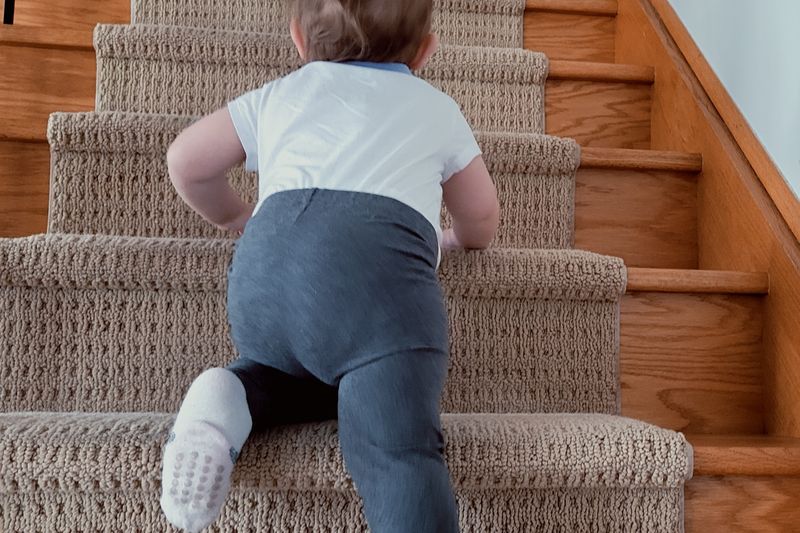
Stairs can become a major hazard once a child begins crawling or walking. A fall from even a short staircase can cause serious injury, while toys left on steps can create risks for children and adults. Hallways may also contain furniture, cords, rugs, and decorative objects that interfere with movement. Safety measures should therefore focus on controlling access, improving visibility, maintaining clear walking paths, and ensuring that stair components are secure. Children should eventually learn how to use stairs safely, but supervision and physical barriers remain important while they are developing coordination and judgment.
Install suitable safety gates where appropriate, particularly at the top and bottom of staircases. Gates should be properly installed and used according to their intended location and design.
Inspect the staircase itself for maintenance problems. Loose handrails, damaged steps, worn surfaces, or poor lighting can increase the risk of falls for everyone in the household.
For safer stairs and hallways:
- Keep steps clear: Toys, shoes, books, and other objects should not be left on stairs.
- Improve lighting: Make sure staircases and hallways are adequately illuminated.
- Secure rugs: Loose rugs and mats can become tripping hazards.
- Check railings: Handrails should be firmly attached and appropriate for the household.
- Avoid climbable objects near rails: Furniture or storage boxes should not give children an easy way to climb.
- Teach stair habits: Encourage children to walk rather than run and to hold the railing when appropriate.
Do not use a safety gate as a substitute for maintenance. A gate cannot compensate for a loose railing, damaged stair tread, or inadequate lighting.
How Do You Improve Safety Around Windows and Doors?
Windows and doors provide ventilation, natural light, and access to different parts of the home, but they can also create significant risks for children. Windows can present fall hazards, particularly on upper levels, while doors can lead children into garages, streets, pools, or other restricted areas. Children may also pinch their fingers in doors or attempt to open locks and handles as they become more independent.
Safety solutions should therefore consider both physical access and the child’s developmental abilities. Regular checks are especially important because children quickly learn how doors and windows work.
Windows should have suitable safety measures that prevent young children from accessing dangerous openings. Window furniture should also be positioned so children cannot easily climb onto it.
Doors leading to garages, workshops, storage areas, pools, or exterior spaces may require additional child-resistant measures.
Pay attention to:
- Door locks and latches: Use appropriate child-resistant mechanisms where access needs to be restricted.
- Finger protection: Consider products designed to reduce the risk of fingers being caught in closing doors.
- Window access: Keep furniture away from windows where it could serve as a climbing platform.
- Balconies: Ensure barriers are secure and do not contain easily climbable arrangements.
- Exterior doors: Make sure children cannot easily exit the home without an adult knowing.
- Garage access: Keep tools, chemicals, vehicles, and other hazards inaccessible.
Remember that safety devices can fail, become loose, or be defeated by a determined toddler. Inspect them regularly and replace damaged or ineffective equipment.
What Should You Do About Electrical and Fire Hazards?
Electrical and fire hazards require special attention because children may not understand the consequences of touching outlets, cords, switches, flames, or hot objects. The danger also extends beyond obvious sources such as fireplaces and stoves. Overloaded outlets, damaged cords, heaters, candles, and improperly stored batteries can all create safety concerns. Parents should combine physical safeguards with good household habits and emergency preparation.
Children should gradually learn what is safe to touch and what requires adult assistance. At the same time, adults should never rely on a child’s understanding of danger to replace appropriate safeguards.
Inspect electrical cords and plugs regularly for visible damage. Damaged electrical equipment should be repaired or replaced rather than covered with makeshift solutions.
Keep portable heaters, candles, matches, lighters, and other heat or ignition sources away from children. Heating appliances should be positioned according to the manufacturer’s safety instructions and kept clear of flammable materials.
Every household should also consider:
- Smoke alarms: Install appropriate smoke alarms and test them regularly.
- Carbon monoxide protection: Where relevant, use suitable carbon monoxide detection equipment.
- Fire extinguishers: Keep appropriate extinguishers accessible to adults and learn how to use them.
- Emergency exits: Make sure family members understand how to leave the home safely.
- Electrical maintenance: Have electrical problems addressed by a qualified professional.
- Battery storage: Keep loose batteries and battery-powered items that can be opened by children out of reach.
- Emergency numbers: Keep important emergency contact information readily accessible.
Older children should be taught basic fire safety, including how to respond to alarms and why they should never play with matches, lighters, electrical outlets, or cooking appliances.
How Can You Make the Backyard and Outdoor Areas Safer?
Outdoor areas give children valuable opportunities to play, exercise, and explore, but they also introduce hazards that may not exist indoors. Gardens, decks, driveways, pools, sheds, tools, plants, and outdoor equipment all require consideration. Outdoor safety is particularly important because children can move quickly and may have access to larger spaces than they do inside the house. Parents should establish clear boundaries for where children can play and which areas require adult supervision. The objective is to create an environment where children can explore safely while reducing access to hazards such as traffic, water, tools, chemicals, and unstable structures.
Start by checking the boundary around the property. Gates and fences should be secure enough to prevent young children from wandering into unsafe areas.
If the property has a swimming pool or other significant water feature, use appropriate barriers and never assume a child can swim well enough to be left unsupervised.
Other outdoor safety measures include:
- Store tools securely: Gardening tools, power equipment, ladders, and sharp objects should be inaccessible to young children.
- Lock away chemicals: Fertilisers, pesticides, fuels, and other substances should be stored securely.
- Inspect play equipment: Check swings, slides, climbing structures, and other equipment for damage or instability.
- Check plants: Identify plants that may be harmful if touched or eaten.
- Keep driveways controlled: Teach children that driveways are not play areas and maintain clear visibility when moving vehicles.
- Maintain decks and stairs: Repair damaged boards, loose railings, and slippery surfaces.
- Remove standing water: Empty buckets, containers, and other sources of accumulated water after use.
Outdoor safety should also include weather considerations. Very hot surfaces, intense sunlight, storms, and slippery conditions can create additional risks depending on the season.
How Often Should You Recheck Your Home for Child Safety?
Childproofing is not something you complete once and forget. Children develop rapidly, and every new skill can change the safety profile of a room. A baby who could only crawl may soon be standing, reaching, climbing, or opening cabinets. As children grow older, some barriers can eventually be removed, while new hazards may need to be addressed. Families should therefore make home safety inspections part of their routine. A periodic review can also identify damaged safety equipment, loose furniture, deteriorating surfaces, or household changes that introduce new risks.
A useful approach is to perform a quick safety inspection every few months and whenever your child reaches a new developmental stage.
Recheck the home when your child:
- Begins crawling or walking.
- Starts climbing onto furniture.
- Learns to open drawers, cabinets, or doors.
- Begins using household objects independently.
- Moves from a cot or nursery into another bedroom.
- Starts spending more time outdoors.
- Becomes old enough to use appliances or stairs with supervision.
You should also reassess the home after renovations, furniture purchases, changes to room layouts, or the arrival of new appliances. Something as simple as moving a chair underneath a window can create a hazard that did not previously exist.
What Safety Habits Should Parents Teach Children?
Physical safety measures are important, but children also need to develop an understanding of safe behaviour as they become capable of learning household rules. Teaching should be age-appropriate and repeated regularly rather than delivered as a single serious conversation. Young children may understand simple instructions such as “stop,” “hot,” or “don’t touch,” while older children can learn more detailed explanations about electricity, fire, chemicals, strangers, tools, and emergency procedures. The goal is to gradually build good judgment while recognising that supervision remains necessary.
Use simple and consistent rules that children can remember. Explain why a rule exists rather than relying only on commands.
Useful lessons include:
- Ask before using unfamiliar objects: Children should know that tools, appliances, medicines, and chemicals require adult permission.
- Stay away from hot surfaces: Teach children to recognise the kitchen, stove, oven, heaters, and hot liquids as potential hazards.
- Do not play near stairs: Encourage safe movement instead of running or playing on staircases.
- Keep toys off stairs: This reduces both child and adult trip hazards.
- Never play with electrical outlets: Explain that electricity is dangerous and requires adult handling.
- Stay away from water without an adult: Establish clear rules for baths, pools, and outdoor water features.
- Tell an adult about hazards: Encourage children to report spills, broken toys, damaged equipment, or unusual smells.
As children become older, teach them how to respond during emergencies. Practising what to do during a fire alarm or emergency can make the correct response more familiar and easier to remember.
What Is the Best Way to Maintain a Child-Safe Home?
Creating a safer home is an ongoing combination of prevention, supervision, maintenance, education, and adaptation. Rather than trying to remove every object that could potentially cause harm, parents can focus on the most significant hazards and make practical changes that fit their household. A room-by-room inspection makes this process easier because it encourages families to consider the unique risks associated with kitchens, bathrooms, bedrooms, stairs, outdoor spaces, and other areas. It also creates an opportunity to identify maintenance issues that could affect the safety of everyone in the household.
The most effective approach is to make safety part of everyday home management. Store hazardous items consistently, repair problems promptly, keep pathways clear, and regularly inspect child-safety equipment.
A practical household safety routine can include:
- Walk through each room: Look at the space from a child’s perspective.
- Identify the highest-risk hazards: Prioritise falls, burns, poisoning, drowning, choking, and other serious risks.
- Secure dangerous items: Move or lock away anything that children should not access.
- Anchor unstable furniture: Pay particular attention to tall or heavy pieces.
- Check safety devices: Inspect gates, locks, guards, alarms, and other equipment.
- Teach age-appropriate rules: Reinforce important safety habits regularly.
- Review the home as children grow: Update precautions as their abilities change.
- Maintain the property: Address damaged flooring, electrical issues, loose railings, broken locks, and other problems promptly.
Final Thoughts on Creating a Safer Home for Children
Knowing how to ensure child safety at home begins with recognising that everyday environments can change as children grow. A safe home is not necessarily one without hazards; it is one where significant risks have been identified, controlled, and regularly reassessed. From securing furniture in the living room and limiting access to kitchen hazards to improving bathroom safety, protecting stairways, securing windows, and maintaining safe outdoor spaces, each improvement contributes to a safer environment.
Parents and caregivers should combine childproofing with supervision, education, and regular maintenance. As children become more mobile and independent, their environment should evolve with them. Taking a room-by-room approach makes it easier to identify overlooked dangers and create practical safety habits that protect children while allowing them to explore, learn, and grow confidently at home.